







Best Practices
A Penny Saved: How to Get Your Food Cost Under Control
Getting the cost of your food under control starts with accuracy in inventory and accounting. Whether you're using automated software or entering data by hand, if you're not taking accurate measurements, you can't understand your true expenses. Consider these best practices when looking to shave points from your cost of goods sold as a percentage of sales in your restaurant operations.
Diligent logging of data is critical. Without accurate data, you're just guessing. A common mistake operators make is not recording every purchase during their inventory count. This creates inaccurate information about the cost of food and beverage goods sold and will make cost control more difficult. Another mistake is forgetting to update the count sheets to show the most recent purchase price for items.
When operators do have the data to examine food costs, they frequently focus on numbers that don't tell the whole story, such as item price and cost per plate. While item price is helpful when it indicates pricing trends week over week, it doesn't tell you much examined in isolation. Cost out the entire menu, then compare the theoretical food cost (i.e. your cost in a perfect world, where nothing is wasted, sent back, stolen, or spoiled) and your actual food cost. Knowing the variance between ideal and actual food cost can result in actual control and cash savings, just by figuring out what's reducing yield and correcting the problem. For example, you can't control the price of ground beef, but you can control the cook who over-portions each patty.
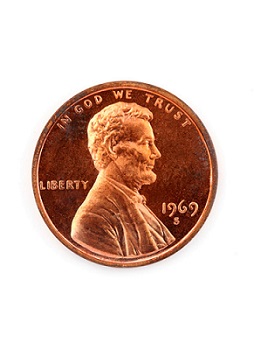
A penny saved is a penny earned.
– Benjamin Franklin
Software can make it simpler and faster to review food costs, track trends, and spot problem areas. Automated food cost control software will usually show updated prices, the plate cost, and the ideal food cost. You might ask your broadline distributor if the company offers this software as a service. Having complete, accurate data at a glance means that operators can make decisions quickly, with no costly delays and no sticker shock when something costs too much.
Do not automatically default to promoting items that carry the lowest food cost as a percent of the item's cost. Sometimes it's better to sell a higher food cost item and have higher food costs if you're taking in higher gross profit dollars. It takes fewer sales of the more expensive item to move the needle toward profitability. Customers who order out may be looking for something they can't make at home; thus, a more expensive item could feel like a treat.
While thriftiness can be a valuable virtue for independent operators, be wary of false economies. Operators often feel they need to maintain relationships with multiple distributors "to keep them honest" on their prices, but this isn't always advantageous. Some restaurant business consultants recommend that operators secure a pricing agreement with one main distributor. This locks them into a set markup, stabilizing food costs and saving significant time in the ordering and bidding process.
If you want to better manage your restaurant’s goods and control food and beverage costs more effectively, sign up for our courses, How to Know What Your Food Cost Should Be and Menu Costing Basics . Plus, check out our handy Food Cost Yield Calculator tool.
-

Online Course
How to Know What Your Food Cost Should Be
In this course, we'll show you how to establish your realistic target food cost -- what we call your "Ideal Food Cost". Ideal food cost (often called theoretical cost) is the cost expected for a given sales mix over a period of time, assuming proper portioning and normal waste and yields. How to Know ...
-
Online Course
Menu Costing Basics
Knowing what each of your menu items costs to prepare is one of the most basic yet overlooked aspects of running a profitable restaurant. Costing out your menu can be an arduous task, but you must know your menu cost before you can make intelligent decisions on cost-cutting, price increases or other ...
-
Download
Food Cost Yield Calculator
The Food Cost Yield Calculator is a flexible Microsoft Excel set of spreadsheets designed to aid restaurant owners, chefs, and managers in determining the true cost of the raw products used to produce menu items.
-
Article
Spot Food Cost Problems by Knowing Your Ideal Food Cost
"What should my food cost be?" - this is one of the most often asked questions by restaurant operators. Considering that food cost, along with labor cost, make up 60-70% of all restaurant expenditures, knowing what your restaurant's food cost "should be" is the first step towards controlling it