






Article
Hand Sanitation Tips and Techniques for the Bare or Covered Hand
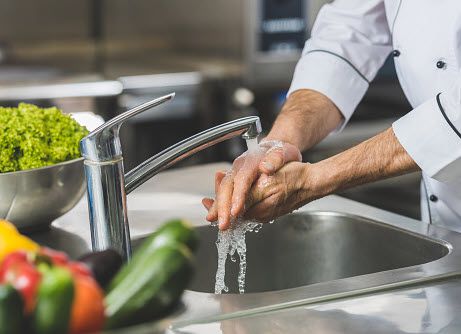
The Centers for Disease Control and Prevention (CDC) has reported that handwashing is the most important method of preventing the spread of pathogens that cause foodborne illness. The importance of proper hand sanitation cannot be overemphasized, and in this article we look at handwashing, using as a springboard the oft-uttered question, "Gloves or No Gloves?" In fact, gloves or no gloves, effective hand sanitation techniques are critical. Gloves should not be used as an excuse for lax hand sanitation techniques.
Gloves often provide a false sense of security to restaurant employees, as if they are magic bullets in the battle against spreading foodborne illness. Perhaps this notion hearkens to television portrayals of operating rooms, where latex gloves are accurately portrayed as standard dress. "If doctors wear them to protect patients, then if we wear them, it will protect our customers," is a common way of thinking. What television rarely shows is that gloves are only one aspect of hand sanitation in the operating room. In real life, surgeons and other operating room staff employ vigorous hand washing before donning gloves. They are obsessive about not touching any surface that will contaminate the gloves. This often escapes restaurant workers and managers.
Learning Objectives:
By the time you've finished reading this article, you should be able to:
- Explain why wearing gloves is not the complete answer to sanitary food handling.
- Describe proper handwashing techniques.
- List some of the obstacles to maintain proper handwashing practices in the kitchen.
"Bare hands or gloves, food can be contaminated either way if restaurant employees do not wash regularly and properly handle certain types of meats, poultry and seafood," says Dennis Gemberling, founder and president of Perry Group International, a hotel and restaurant management company. "The only way to ensure that food safety is practiced at all times is with regular training and guidance of each and every food handler and server," Gemberling says.
To Continue Learning