







Article
How to Be a Better Boss: Essential Leadership Skills for Restaurant Owners and Managers
Editor's note: This article is based on the May 2023 webinar "How to Be a Better Boss." Whether you have the title of supervisor, manager or owner, this webinar will show you how to become more of a "leader" and build a workplace culture that is positive, productive and more rewarding for everyone on your team. You can view the recording here:
-

Webinar/Podcast
How to Be a Better Boss: Key Leadership Skills for Restaurant Owners & Managers
Whether you have the title of supervisor, manager or owner, this webinar will show you how to become more of a "leader" and build a workplace culture that is positive, productive and more rewarding for everyone on your team (including YOU).

If your operation is typical of many independent concepts, your biggest post-Covid challenge has been staffing. While the service labor shortage appears to be easing, there is no turning back on the higher wages required to attract and retain staff. With the cost of labor increasing at a time when you are fighting for margin points, developing your management team's leadership capacity is more important than ever.
Without adequate quality staffing, it is difficult to run a good restaurant and provide the kind of experience that fosters repeat patronage. The good news is we learned from RestaurantOwner.com members who not only survived, but succeeded in the wake of the pandemic. And among the most important qualities is leadership.
LEARNING OBJECTIVES: |
| By the time you've finished reading this article, you should be able to: |
|
From our many interviews with successful operators, including our Corner Booth podcast, we find that the winning concepts have strong teams who are committed to operational excellence and a top-notch guest experience. We have also learned that workplaces that continue to rely on traditional "command and control" management practices are finding it increasingly difficult to attract and retain a team of high-quality people.
With plentiful employment options available, service workers who do not feel appreciated, valued, and motivated to do their best, will likely look for job and career opportunities elsewhere. One of the keys to becoming more of a "leader" is understanding that leadership is very different from management. Simply put, people follow managers because they must. People follow leaders because they want to.
Yes, you must pay competitive wages to attract and retain staff. We do not want to downplay that. That said, the reason employees stay or leave a company is rarely a matter of money. Very often it is about how well the restaurant is managed. For over two-thirds of workers, it is not more money or better hours elsewhere. It is more often the way they are treated by their manager.
You should also bear in mind that your cost of labor is not only the wages you pay your crew, but the expense of turnover. When you lose a staff member, you must go through the process of recruiting, interviewing, hiring, onboarding and training. That takes time and money. And, often, the quality of your food and service suffers in the meantime. And that can cost repeat patronage and positive word-of-mouth, without which no restaurant concept can hope to succeed.

Employees tend to leave whether managers are micro-managing or hands-off; they are more inclined to stay when they believe their manager cares about them. So says Mel Kleiman, Founder and President of Humetrics, Inc., a Sugar Land, Texas, human resources consulting firm.
He found that during the pandemic many restaurant employees left for more money. You cannot blame them. Restaurant work is challenging and deserves livable wages. Yet we also found that a number of these employees wanted to return to their old positions. They did not like their new situations. Former restaurant employees might still enjoy working in the kitchen or serving guests more than restocking shelves. Cooks want to cook. Servers want to serve. But if they are returning to angry owners, stressed-out GMs, and a sullen food assembly line, that warehouse assistant job at Amazon starts looking better and better.
With the craziness of the pandemic and recent social unrest, in addition to the challenges of keeping your proverbial lights on, it is not easy for you to "feel the love". No matter, say successful operators who stress owners and managers need to express appreciation and loyalty, especially now.
Not every employee will appreciate it. But it could win over those who truly enjoy restaurant work and are just looking for a reason to hang in there with you. And if few of your staff had loyalty during the pandemic, they likely did not have much prior to the pandemic. It might warrant an overhaul of your culture and management, beginning with your GM who sets the tone for the operation.
An important question that the restaurant industry must face is how it is going to develop talent and retain good staff. Leadership breeds loyalty. And loyalty breeds retention and a quality experience for both guests and staff. Consider Frank Mendoza, founding owner of El Sushi Loco, a Southern California Mexican sushi concept (yes, it is a thing and has a big following). Mendoza has a people-first bias.
He discovered his staff was so loyal when the pandemic hit, they agreed to come back at $13 an hour, the minimum wage in California, rather than the $18-$20 some were making pre-pandemic. Mendoza told the employees he would increase salaries when the restaurant began to make money; in the meantime, he says he has been able to give employees bonuses based on prime cost savings.
Keep Learning...
-
Success Story
A/C Technician to Restaurateur: An Unlikely and Inspiring Story of Restaurant Success
How does an air condition technician with no restaurant or business become a restaurant success story? Frank's determined, entrepreneurial spirit, a little luck, and the right resources and education turned his dream into a successful reality.
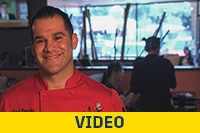
But after starting out with a simple food cart on the streets of Los Angeles, he got a break and was able to open his first restaurant in 2011. It became wildly successful. It was so successful that Frank was able to open a second location in 2014. Today Frank is now the owner of two highly popular, high volume and financially thriving El Sushi Restaurants in East LA.
Managers Versus Leaders
Managers require people to act and perform in a certain way through direction and, unfortunately, intimidation. Leaders try to influence people through inspiration, getting them to want to perform at a higher level.
LEADERS MANAGE EXPECTATIONS. THE FIRST PAY PERIOD PROVIDES A REALITY CHECK FOR THE NEW HIRE WHETHER THEY ARE MEETING THE EXPECTATIONS OF THE JOB; WHETHER THEY ARE DOING WELL OR NEED TO STEP UP THEIR GAME. YOU DO NOT WANT TO LEAVE THEM WONDERING.
Leadership recognizes and has a deeper understanding of what really motivates people to perform at a high level. Leadership recognizes that there is a better way to get the results that they want. Leadership recognizes the experiences that those people are having on the job. Kleiman encourages managers to ask new hires how they like to be managed. Specifically, how would that employee like to be told if something they were doing was incorrect? This information helps a manager quickly decode preferred communication styles.
Leaders manage expectations. The first pay period provides a reality check for the new hire whether they are meeting the expectations of the job; whether they are doing well or need to step up their game. You do not want to leave them wondering.
If the new hire is meeting or exceeding expectations, managers can let them know that they "really earned that paycheck." If the employee is not performing to the desired level, Kleiman suggests the manager should let them know their effort has only earned, let us say, 80 percent of the paycheck and be clear where the employee needs to improve.

"The less quality of performance you accept from any employee is a signal to every other employee how badly they can perform and still keep their job," says Kleiman. "If the new hire isn't required to follow the closing protocol, then others will get the message that it's optional. And if there are different standards of performance for different staff, it will kill morale." Employees will pick up on the arbitrary and capricious management and lose respect for the operation.
To encourage good performance, you need to be liberal with positive recognition that rewards employees for doing a good job. Too often, managers focus their energy on negative recognition, or dealing with problems. They miss the opportunity to give attention to those employees who go above and beyond. Everyone enjoys an atta-boy and atta-girl.
"When I operated my own restaurants and had very little cash flow, I knew I had to be creative with rewarding and retaining my staff in a creative, low-cost manner," says veteran restaurant consultant Arlene Spiegel, president of Arlene Spiegel & Associates in New York City. "So, when I hired them, I asked them to create a 'wish list' of things they wanted in three tiers: $50, $100, $150. I kept each wish list in the employee's personal files. Some of the 'wishes' were movie tickets, sneakers, dinner out, flowers, days off, attendance at a trade show; and even additional 'free' uniforms."
IF YOU ALLOW YOUR STAFF TO SPEAK UP WITHOUT FEAR OF REPRISAL, YOU WILL LIKELY LEARN A GREAT DEAL YOU CAN APPLY TO IMPROVING YOUR OPERATIONS. MOREOVER, IF ACCOMPANIED BY THE SENTIMENT THAT "THINGS ARE GOING TO CHANGE," YOU MIGHT BE ABLE TO INFLUENCE THE SAME CULTURE SHIFT TO WHICH LEMONIS REFERS. THE SENSE THAT THINGS ARE NOT ONLY GOING TO CHANGE, BUT ARE GOING TO GET BETTER.
As the employees were "caught in the act of doing something special," or after a particularly successful week or month, Spiegel would go into the "wish list" files and grant their personal wishes. "Of course, each gift matched the relevant tier in dollar amount (and came with) a personal, handwritten note from me. As it turns out, after years of keeping in touch with former staff, the personal notes had the most sustainable value."
The Culture of Engagement
Disconnected, disengaged employees are far more likely to report stress, worry, anger and burnout. These strong emotions affect how individuals treat their coworkers and guests. Dis- engaged employees make it harder for the others on your team. They might call in sick or take their stress out on coworkers or, even worse, on a guest. Eventually, as many as one in five will quit their job.
With experts predicting culture as the make-or-break factor for independent restaurants, let us consider the relationship between business culture and employee engagement. A clearly defined culture not only attracts the people who are right for your business, but also those who share your organization's values.

When it is well-defined, employees who are not aligned with the values of the business will recognize it quickly, and either change their perspective or leave. If lackluster performance from unmotivated employees is a sore point for you, changing and defining the company culture can spare you significant headaches in retaining good employees and terminating poor employees. Data from Gallup, self-described as a global analytics and advice firm that helps leaders and organizations solve their most pressing problems, found a high correlation between employee engagement, well-being, productivity and turnover. Employees who derive satisfaction from their job have better overall well-being.
When workers are fulfilled by their jobs, they have better finances, social lives, physical energy, and mood. In turn, they can give more at work. Positively engaged employees do their jobs and help others. Their positive attitudes are infectious. Guests are treated warmly by an employee who feels valued. Over time, this can turn guests into regulars who, in turn, bring new people to your restaurant.
"Things Are Going to Change"
You might be familiar with Marcus Lemonis, best known for his television personality on CNBC's "The Profit" where he brings struggling business back from the brink.
He invests in small businesses that have a chance to succeed but, for whatever reason, are struggling. When Lemonis invests in a company, he cuts a check and he puts his money on the line, but he exercises 100% control over that company for at least a certain amount of time.
His first course of action is holding a meeting with the business's staff, at which he tells them that "things are about to change." Lemonis finds this inspires an immediate culture shift. He sees the relief and sense of optimism and hope on the faces of employees.
If you have watched Gordon Ramsay's "Kitchen Nightmares," you will recall that Ramsay takes the same approach. He engages the staff and asks them their opinions on why the business is struggling. Their responses are candid and insightful.
You have the same opportunity in your restaurant. If you allow your staff to speak up without fear of reprisal, you will likely learn a great deal you can apply to improving your operations. Moreover, if accompanied by the sentiment that "things are going to change," you might be able to influence the same culture shift to which Lemonis refers. The sense that things are not only going to change, but are going to get better.
The Power of Trust
Lack of trust in organizations can cause crippling dysfunction and cost a business plenty. Nevertheless, 'high-trust' working environments seem to be the exception, rather than the rule. "In all relationships, trust is the most important ingredient," says Van Eure, the owner of The Angus Barn, an iconic Raleigh, North Carolina 650-seat concept. "Just as our guests have to trust that our food is as stated on the menu, our employees have to trust that we will always back up what we stand for. Trust works both ways. We try to hire people who we know we can trust because they are the front line, and are empowered to make decisions."
Eure, whose accolades include an "Industry Legends Award" from the National Restaurant Association, says that a restaurateur can establish that trust by coaching and empowering staff members to handle situations that arise from what she calls "moments of truth."
She says she does that "so they have the ability to make the customer happy and recover from a situation immediately, without having to wait for management/owner approval." Many companies, Eure says, "automatically have a low-trust environment. Therefore, it is often difficult for employees to adjust to an environment where they are able to make decisions." Her own restaurant maintains an open-door communication policy.
"Communication is key. Ideally, team members are comfortable in handling a 'misfit' or 'untrustworthy' team member. Once the misfit team member has been dealt with, often trust must be rebuilt. This is done by celebrating successes and continuing to empower the team to make decisions for the betterment of the business."
Eure urges colleagues to listen to their staff. "Use the 20-foot rule," Eure says. "If you have a problem to solve, ask the team members that are within 20 feet of the problem. They will come up with the solution."
In his paper, "How to Build Trust in an Organization," Chris Hitch, Ph.D., management consultant and former program director for executive development at University of North Carolina's Kenan-Flagler School of Business, he cited a study by Interaction Associates that found high-trust organizations:
- Have a strong sense of shared purpose.
- Have employees who work together to support that purpose.
- Create cultures in which tolerance and cooperation are highly valued.
- Have leaders who coach rather than just manage.
- Have many people participate in making decisions.
Hitch also drew on research by Amy Lyman, co-founder of The Great Place to Work Institute, who defines a high-trust organization as a place "where employees are treated fairly, are respected, and the employers support their professional growth... in organizations with high levels of trust, employees see others (particularly management) as credible - they mean what they say, and believe what they say is true - and have confidence that the actions of others will remain consistent with their words. In high-trust organizations, co-workers believe that others (particularly management) are ethical in their business practices."

High-trust organizations have another characteristic: They seem to be quite rare. According to Hitch's paper, research conducted by Reina and Reina found that nine out of every 10 employees have reported experiencing some sort of breach of trust in the workplace on a regular basis.
Howard Partridge, a management consultant, cites Gallup Tracking, which, he says, reveals that 70 percent of American workers are disengaged. "The report revealed they would rather have their manager fired than to get a 20 percent raise," he says, adding, this brings up other big mistakes owners and managers make - that their employees only care about money.
"Trust is rare in business," Partridge says, "and there is plenty of data to support the fact that its absences cost the business a lot of money, create a ton of stress, and are at the root of most frustrations on a team."
If trust is that rare, could it be a competitive advantage? Partridge believes so, and he says he encourages owners to "imagine what can happen on a team that has a high level of trust."
Keep It Centered
As an owner and manager, you have a responsibility to maintain efficiency and quality in your concept. And while you might embrace the principles of "leadership," you often feel a need to "play cop." And this is an inevitable part of running a dynamic business in which both guests and staff test your patience.
In his book "Setting the Table," Danny Meyer shares a story about a discussion with one of his mentors. Meyer confided that his servers and managers were continually testing him, at the time a young operator.
His mentor grabbed the salt shaker and moved it to one corner of the table. He then instructed Meyer to return it to its proper place. Meyer placed the shaker at the center of the table. His mentor then moved the shaker to another corner with the same instructions to Meyer. Of course, Meyer re- turned the shaker to the center.
Staff, managers and even guests will do things that are inconsistent with the way you want to run your business. Your job is to put things back in their proper place.
When you are focused on "keeping centered" a profitable quality experience for guests and your crew, you will do what is necessary to make that happen. Sure, you will always have to "play cop" at some point. That said, however, if you can inspire your team to support your efforts with leadership rather than brute force, you will find that they will move the shaker back to the enter of the table without your prompting.
FIVE STEPS TO BETTER RETENTION
Restaurant consultant Rudy Miick, principal of The Miick Companies in Boulder, Colorado, calls turnover "absolutely an outcome-driven by poor management and poor leadership, which are symptoms of loose/poorly-defined culture — which creates loose/poorly defined brand execution."
It is a problem he has been successful in solving. "Our clients, regardless of segment, location or check average, are consistently running 78% to 82% retention — no BS," says Miick. "There's no excuse for having 95% turnover. Period. Leaders, managers and companies bring this on themselves with inconsistent behaviors." Miick identifies five key steps in reducing turnover:
- Define the cultural norms, purpose and values of the company upfront in ads and storytelling prior to hiring.
- From initial contact with job candidates through the interview, whether the process is online or in person, you should model your business's commitments to its culture and expected behavior. In other words, "walk the walk".
- From employee orientation through the training process, again, "walk the walk". Otherwise, the values you profess to be so important to your business will seem like nothing more than "lip service".
- From training through the work shifts themselves feedback should be "constant and based on data rather than compliments and criticism."
- Catch staff doing things right. "Coach to the positive instead of finding fault, meaning instead of 'Don't do that,' try 'Here's what I need you to do.'"
- Do you trust your co-workers?
- Do you trust the owners and managers?
- Do you view your co-workers and supervisors as credible?
- Do you believe your supervisors' actions are consistent with their words?
- Do you understand the business's mission and vision and the role you play to achieve them?
- Do you feel that risk-taking is encouraged?
- Do you feel safe communicating your ideas and opinions with your co-workers and supervisors?
- Do you believe you are treated fairly and with respect?
- Do you feel the owners and managers communicate openly?
- Do you feel your supervisor, owners and other managers care about and encourage your professional development?
- Do you believe your ideas are considered when decisions are being made in the restaurant?

CHECKLIST
ASSESSING THE LEVEL OF TRUST AMONG YOUR STAFF
In his 2012 paper, "How to Build Trust in an Organization," Chris Hitch, Ph.D., identifies questions that can help assess the level of trust among staff. We have modified them slightly to reflect the roles in a typical independent restaurant. Writes Hitch, "An analysis of the results should help identify which elements of trust - credibility, respect and fair treatment - the organization as a whole is accomplishing and which areas need improvement."
Some questions that can help assess the level of trust include: