






Article
On a Mission to Bring Back Banquet Business
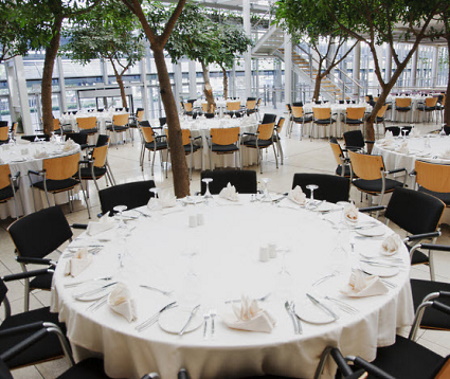
Prior to the pandemic, investment in building banquet and catering business was considered the "smart money" in the full-service sector.
As noted by Robert Simmelink, executive chef at Noa Noa Restaurant in Beverly Hills, California, banquets and off-premise catering have higher margins for a number of reasons. There is the economy of scale of a pre-planned menu with a handful of items. You know how much inventory you will need based on the guest count. Labor costs are lower, since fewer servers are needed to manage 50 wedding guests, as opposed to, let's say, 25 two-tops.
Banquet business was perhaps the biggest casualty of the pandemic for successful full-service operators. Nevertheless, restaurateurs remain bullish on their return, catering to small groups and applying rigorous safety procedures.
For an off-site event there may not be any serving staff to pay. "When the event is on-site, a banquet requires sometimes two-thirds fewer front-of-house staff than a dinner service requires, again saving the restaurant labor dollars," adds Simmelink.
"It does not take that much additional labor to prepare 100-plus portions of most menu items versus just 30 to 40 for sit-down dining," Simmelink explains, "with the benefit of charging a similar price per portion or order at an event."
Operators who mastered marketing and execution of banquets and catering -- known collectively as "private parties" -- often rest their heads at night in glib satisfaction. Success begets success in the private party realm, and it can be quite profitable.
One such operator, Gary Worden, managing partner of Piropos Argentine Restaurant in Kansas City, Missouri, says his banquet business has been impacted "dramatically, both in scope and frequency. Our business dropped from $400,000 per year to less than $25,000. We were only able to accept 10 people for a banquet until recently, with restriction being lifted only in the last week".
Especially for upscale concepts that relied on brisk banquet and catering revenue to push the business into the black, operators like Worden and his peers long for the day when they return. And they might have some reason for optimism. At the end of March, Worden was more upbeat having received a number of telephone calls from potential banquet hosts seeking quotes and even a few holiday season bookings.
Where is the Happy Ending?
It is hard to discuss the status of any restaurant sector (other than quick-service chicken and pizza perhaps) without the litany of sad pandemic stories. And, unfortunately, more than any other revenue stream of the full-service restaurant business, private party business suffered the most in the wake of the pandemic. Large gatherings became super-spreader news stories, rather than cause for celebration.
Says Arlene Spiegel, president of Arlene Spiegel & Associates in New York City "With the ups and downs and downright shutdowns as a result of the pandemic, the banquet business has been decimated. Clients have requested their deposits back and are very reluctant to sign any guarantees for future bookings. This has left this sector of the industry without a party or a plan."
Another burden on banquet operators is the everchanging rules and regulations about the number of guests and protocols required for indoor and outdoor gatherings. Some states are forcing establishments to become "like law enforcement agencies instead of providing a warm welcome to guests," Spiegel notes, "Who is going to tell a guest entering the ballroom that they can- not enter because they didn't provide proof of a negative COVID test? Who is going to tell the bride and groom that the bridesmaid's temperature reading is too high?" And then add varying personal philosophies about CO- VID restrictions clouding what should be a joyous oc- casion, such as guests angered by social distancing and other cautionary restrictions.
Are private parties destined for a Time magazine "… Is Dead" cover story? Fortunately, people still want to celebrate anniversaries, birthdays, bar mitzvahs, and weddings over food. Like every aspect of the restaurant business, however, the game has changed. In this article, we discuss its future and revitalization.
Small-minded
Jackie Spigener built a robust restaurant business at her Silver Sycamore campus in Pasadena, Texas. A great deal of her success was borne from onsite wedding and special occasions business, which all but dried up in spring 2020.
With the roll out of three vaccines, and states gradually easing restrictions on group gatherings, operators are cautiously considering how they might reboot banquet and catering. Spigener said her business is slowly picking up steam. In a classic lemonade from lemons tale, Spigener profited from a 2020 trend -- the "micro wedding", which became the vernacular of pandemic-era brides to be.
"One thing that is funny," she said, "is we had been hosting what we called 'intimate weddings' for 15 years. These are small gatherings, maybe 20 or 30 people." During the pandemic, small-group weddings became popular as couples sought to tie the knot but lessen the odds the celebration would become a COVID spreading occasion.
Says Spigener, "We changed the term on our website to "micro weddings" and business took off." In fact, her wedding banquet and planning sales increased 10% from 2019 to 2020. Simmelink echoed her experience. "The 100-plus-person wedding is now down to 10 to 20 people."
Labor Pains
If your business's on-premises service was shut down and you are keeping the lights on with delivery and take-out, you might not have service staff at your beck and call. How can restaurants doing banquet service make smaller gatherings profitable?
"That's very, very difficult," says Alex Brennan Martin, the owner of Brennan's Houston. Overhead, with the excep- tion of variable labor, remains pretty much as is. "We've done our best to have offerings that might help with check average, but that can only help at the margins."
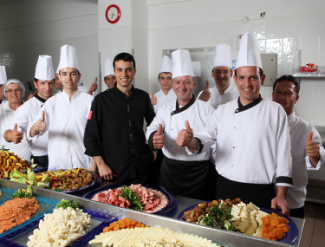
If you had to let go of staff during the pandemic and operate your full-service and to-go business with a skeleton crew, it might be difficult to muster sufficient forces to provide a good experience, even with a sparsely attended event. Cross-training staffers who have not had banquet experience is "always a high priority for us," says Martin. "About 50% of our staff rotate between a la carte and banquet. The key is to have very experienced staff in both areas that we can use as our trainers and mentors."
Martin adds management works with those key employees to improve their skills. "In the end, our training is side by side in person." The amount of labor to expect based on party size varies, says Martin, depending on the type of event "but our rule of thumb is one server per 10 guests."
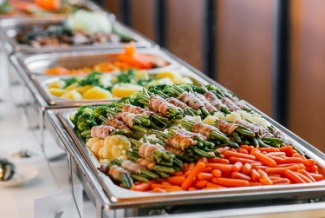
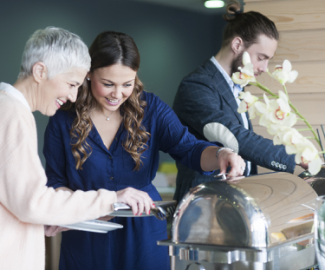
One of the challenges imposed by pandemic safety practices is the end of the banquet buffet, requiring additional staff to serve the food. In the past, guests could queue to fill their plates.
Dirk Happee, a vice president for Dick's Restaurant Supply in Bellevue, Washington, says the only change he sees ahead is that "no one will go to a self-service buffet anymore." Indeed, buffets will get more expensive as they will be service-only, which is labor-intensive.
Perhaps the end of the buffet is welcome. Happee believes self-service buffets wore out their welcome among many people a long time ago. "Anyone that thinks a buffet pre-Covid was ever not a point of contact, contamination and spread was already living in denial. I've never understood how they were legal to begin with, especially when you toss in the potential bad actor wanting to do a mass-poisoning event."
If buffets remain in existence, says Happee, they will be guarded like fortresses. Sneezeguards "will become cubes, if you will, protecting from all sides, with no air gaps. Only the server will have access to the food to limit any viral exposure. I would also expect to continue to see hand sanitizer at the front, and for sure at buffets."
Marilyn Schlossbach, a long-time caterer with headquarters in Asbury Park, New Jersey, agrees that buffet options "have certainly shifted," and have led to what she terms a "more communal format of family-style table presentation. I love this shift to the table, which creates more conversation among guests you may be meeting for the first time. Food takes a bit of the awkwardness out of conversation." Family-style service speaks to all of these needs and "moves us away from the buffet-style while staying in line with that cost proforma in a more modern way."
"While business is soft, just getting people in the door is as important as profitability," says Tracy Vaught, president of H Town Restaurant Group in Houston, Texas. "We match our banquet offerings to our current menu to eliminate waste while being very careful to be open only for the shifts where we can do enough business to pay our staff."
H Town cross-trained many staff members on a variety of tasks since the company only hired back a minimal complement. A new banquet worker, whether in the front or back of the house, needs to work with an experienced team to learn the ropes, Vaught suggests. The approach to banquets "is very different from restaurant service. I want to emphasize that there have been very few banquets for us until now. They are just beginning to come back."
Estimating staffing needs for a banquet or catering, Vaught points out, can prove tricky. "I don't think you can say 'It's 50 people, we will need five servers, three cooks, and one bartender.'" The operator must consider the level of service required: plated or buffet, cooking on or off-site, full bar or just wine and beer. "There are lots of variables."
Vaught says marketing can be approached in a number of ways. "If you haven't already, start building an email list from your reservation system. Person to person is incredibly effective. Facebook and Instagram also get the word out. Take great photos and use them on these platforms, but make your website really tell the story."
Spaced Out
In spite of pandemic-driven modifications to banquet areas, the banquet area should feel spacious and welcoming while showing attention to guest safety. This is no easy feat. Some guests may be venturing out of their homes for the first time. It may well require HVAC system modifications in addition to table spacing, social distancing markings, and stepped-up security.
Keep Learning…
-

Article
Air Ventilation Systems and Virus Transmission
Your restaurant's heating ventilation and air conditioning (HVAC) system can spread airborne diseases within your four walls.
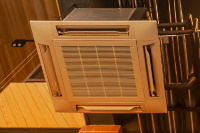
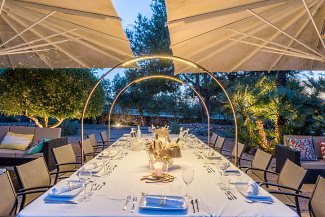
As warmer weather arrives to much of the country, you might be eyeing patio space for banquets as a pandemic safety precaution. In a perfect world, this is reasonable. As we all know, however, weather is fickle.
Planning banquets out of doors is "very difficult," says Worden, explaining there may be little to no outside space and events must be scheduled in the face of unknown weather conditions. Insects can also pose an issue at certain times of the year.
In addition, if you are running a banquet during regular restaurant hours, you might not want to give up your patio for a banquet as it could cannibalize sales from regular guests who, especially now, might prefer to be seated outside. "Normal patio business is more profitable than small banquets in patio," says Worden.
If allowed by your landlord and fellow tenants, tents set up in parking lots or on adjacent fields can pro- vide additional space protected by the elements. Given the challenges facing all businesses during this time, you might have an easier time getting permission of all concerned in your commercial development for these adaptations.
Safety Sells
The marketing program will first and foremost "have to let the world know you are back and excited to make memories again," Schlossbach explains. "Diversity and joy should speak to the client." Schlossbach also believes operators need to promote the safety precautions the operator takes to ensure the health and well-being of guests, including spacing of tables, ventilation and handling of small wares. Guests should be made aware restaurants have the ability to organize events with safety procedures in place that are lacking when hosting a potluck party at home.
Worden points out that many restaurants are finding that their employees and customers are reluctant to come to a banquet until more vaccinations have taken place. Informing potential customers about sanitizing efforts taken by the restaurant is important. Safety procedures should meet the same standards in the kitchen as in the dining room, says Worden. "Clean, clean, clean and temperature-taking at the door."
Selling banquets is one thing in this environment. Making them profitable in this market is quite another. Steve Thanhauser, co-owner of The Angus Barn Restaurant in Raleigh, North Carolina, advises operators to take several steps such as raising prices, upgrading and upselling banquet offerings, and adding gift/take-home items and thematic custom parties tailored to smaller groups.
This also means limiting your menu to items that are popular but have a relatively low food and labor cost. That said, if you know a certain item is a hit with guest pre-pandemic, you need to think long and hard about 86-ing it, particularly if you are in a competitive market.
Terms and Conditions
Until the pandemic is a past memory, you might need to revise your banquet agreements. "Include whatever state guidelines/mandates must be followed by the guest," says Thanhauser. "The client must also sign a waiver that holds the event space harmless in the event that any of their guests gets sick with COVID illness during or after attending the event."
Worden cautions every banquet contract should have attached with it the local COVID-19 precautions stan- dards to inform the potential banquet sponsor of the requirements that will be placed during the event. "People can adapt to bad news," says Worden, adding "but they hate surprises."
In an uncertain environment, when a spike in cases could prompt state or local health officials to impose stay-in-place orders, events can be canceled. Your cancellation refund policy is whatever you think you can manage. The downside of an onerous cancellation refund policy is a spate of gripes on social media, which throw shade not only on your banquet business but your entire concept.
Martin says he is not sure what he could have done differently when it comes to resuming banquets. "When we were shut down, we refunded deposits and worked to schedule out in the future as many events as possible.
Vaught's H Town adjusted its refund/cancellation policies for events that were booked in advance of the pandemic and those that were booked months ahead, thinking that the pandemic would be short-lived. Says Vaught, "It was the ethical thing to do."
On the other hand, Spigener found she needed to include a fairly strict refund policy. If an event has to be canceled for any reason, she will apply the funds to a future date but does not refund the money, which can create havoc with your cash flow. Fortunately, she has received little backlash from her policy, other than a disgruntled client who openly criticized her business on a social media site for brides to be.
Increased Tolerance
Restrictions on what restaurants can and can't do will be around for a while, and most likely in flux, so familiarity with shifting restrictions is crucial. So is the ability of managers and servers to patiently explain them to guests. This places more responsibility on the banquet and catering director; however, this is a position that always requires attention to detail.
Mickey King, the third-generation owner of Antun's, a restaurant in Queens Village, New York, that was founded in 1945 and has since seen most of its revenue swing to catering. The guests are "constantly complaining that the rules set forth by the governor are unfair and arbitrary. However, we as the business owner are just the messenger, and have taken our lumps for a situation where we have no control."
You need to develop a tolerance for change and frustration. Granted, that is not easy. "Everyone has moved their events to our neighboring state of Ohio" where restrictions were less onerous, says Bob McCafferty, co-owner with his wife Jodi of North Country Brewing Co. in Slippery Rock, Pennsylvania. McCafferty believes Ohio state government was more responsible than Keystone State leaders in imposing restrictions on restaurants.
You also have to manage guest expectations and build in contingencies in your banquet and catering agreement to allow for unexpected changes that are out of your control, such as another wave of COVID infections that shut down all on-premises operations. This would include reasonable refund and rescheduling terms.
"The banquet business certainly drastically changed due to the pandemic," echoes Dean Martinus, president of CxRA, the catering division of New York City consultancy Restaurant Associates. "We went from a full and busy season to nothing in that week in March 2020, says Martinus.
"We had to reschedule some events multiple times while completely canceling others," he continues, adding, "uncertainty initially set in as to when and how events will come back, but recently we have realized it will be a slow and gradual return with social events first, a continuation of virtual fundraisers with small in-person events, and last corporate."
To bring banquet business back to pre-COVID levels, restaurants need to combine high standards of operation and service with scrupulous attention to sanitation and an openness to innovation. By Worden's estimation, it could be six months to a year before things return to normal. "Weddings and rehearsal dinners have also been greatly affected, with many families postponing celebrations until sometime in the future." Despite that, he remains optimistic.
"Just hold on," Worden advises peer operators. "Banquets will return, as people like social group engagement." He is convinced that revenue will rise to previous levels once more vaccinations have taken place. "People will want to get together to celebrate as they have in the past. They'll just to have to get use to their temperature taken at the banquet room door."