






Success Story
Hard Work and Strategic Operational Changes Enabled Papito Moe's to Thrive in 2020
Kim and Jesus Vasquez, co-owners of Papito Moe's Authentic Puerto Rican Grub, have been able to survive over the past year when many of the operators around them didn't -- thanks in part to RO.com.
| Papito Moe's Authentic Puerto Rican Grub | |
| Owners | Jesus and Kimberly Vasquez |
| Location |
Salt Lake City and (opening in February) West Jordan, UT |
| Year Founded | 2015 |
| Concept | Full/quick-service Puerto Rican fare |
| Seats | Salt Lake City, 60; West Jordan, 32 |
| Combined Annual Sales | $375,000 |
| Average Per-Person Check: | $16 |
| Number of Employees | 10 |
| Website | www.papitomoes.com |
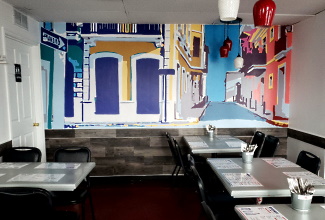
Their concept started as a food truck, followed in November 2019 by a brick-and-mortar full-service restaurant. A second restaurant is set to open in February and the company also does catering.
Papito Moe's casual-style concept serves Puerto Rican specialties. "We offer a laid-back grub experience, as well as takeout," says Vasquez. The menu features what the couple terms "island comfort and street food" that "embodies authenticity, freshness, and simplicity in every bite." It is also unique in their market, as they explain on their web site. "Puerto Rican food is known for its distinctive aroma and flavors that are one of a kind and uniquely different than other cuisines served in Utah."
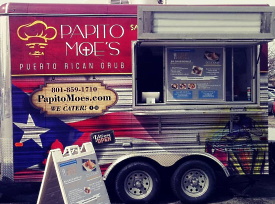
The pandemic took a definite toll on the region's dining out scene, yet Papito Moe's has survived. "With over 400 restaurants closing in Utah last year, we feel like one of the lucky ones," says Vasquez. "Like many, we took an immediate drop in sales -- 60% at first. We started to see a slight improvement towards the end of 2020." The operation was forced to close twice due to the pandemic, then the owners "had to work twice as hard to let people know that the closures were temporary and not permanent. I'm pretty sure some people still think we are closed."
The Vasquezes moved decisively. "We adjusted our hours to account for the loss of the lunch crowd and to support a reduction in overhead. We increased our online presence and started online ordering with curbside pick-up directly from our website." The couple also rolled out a simplified menu that focused on top-selling items and those that travel well for takeout.
Owners Jesus and Kimberly embraced change and focused on fine-tuning their operational processes and procedures which enabled them to survive the past year while much of their competition didn't.
"We changed our operating model, from full service to a hybrid quick-service model," he recalls. They also began posting to social media more consistently and signed up for three third-party delivery platforms.
His most effective moves, Vasquez adds, were the online ordering system, reworked operating model and simplified menu. "The online system and operating model helped us reduced overhead cost. Likewise, the simplified menu, which allows us to reduce inventory cost while also focusing on quality."
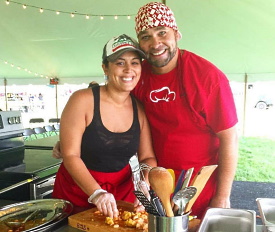
The online ordering system and the simplified menu "have helped us a lot," he adds. As for the new operating model, "so far we are seeing some positive results. Customers are getting used to it, but understand that change was necessary to survive."
The situation has gradually gotten better. "Little by little, more and more people want to dine out."
Vasquez gives much of the credit to RO.com, which he and his wife used to help "develop our processes and procedures, as well as manage our inventory and recipe cost. This was huge for us being newbies to the food industry."
Vasquez admits he isn't sure if it qualifies as a philosophy but says he and his wife "believe in just putting in the work if you want to see results. Every day, sometimes every hour, we have to remind ourselves of this."
The goal, once things get closer to normal, is to "focus on organic growth with customer relationships and the launch of our second location." For the time being, no further changes are planned. As Vasquez explains, "The current changes we've implemented will probably need to be improved over time, so for now we're just tweaking our current strategy as needed." Vasquez waxes philosophical when he notes, "Change is good, change is hard, but change is very necessary if you want to survive, especially in times like these." His advice? "Be flexible, adapt, work hard and you will see the rewards. Oh, and technology is your friend."