





Article
Take Aways: How Embracing a New Normal can Save Your Restaurant
The Go-Go 90s were a golden age of restaurant development. COVID-19 has heralded the To-Go 20s. It's an unprecedented time for restaurants, and one for which failure is not an option, but change is required. Fortunately, restaurants in most cities and states are permitting take-out and delivery, which is certainly better than being required to close doors indefinitely.
Tripoli says it's about putting your best foot forward and calming your guests -- guests that you need to come back later. "I'm not looking at this as being profitable," he says. "What I'm looking at is how can I go through this period of loss and maintain a connection with my guests so that when I reopen, I'm likely to have a better start than the guy down the street who didn't do what I'm doing"

When the owner of a popular upscale steakhouse in Kansas City, Missouri received the order from state government on March 16 to close his doors and only offer carryout or delivery, he had a lot of questions, and no concrete answers. For G. Sidney, it felt as if he was starting his 18-year-old business from scratch.
For Fooq's in Miami, owner David Foulquier realized that his dinner-only restaurant would need to transition quickly if he had any chance of keeping his business afloat. The restaurant expanded its hours to all-day service, added new menu items and began applying discounts to the entire menu of food and wine.
And at Nighthawk Breakfast Bar in Venice, California, where owner John Kolaski says that 90% of his business normally depends on brunch and reservations, he's already pivoted five times, trying to figure out the best way to make his business work now that the cocktail bar and dining room are closed.
Learning Objectives:
By the time you've finished reading this article, you should be able to:
- Explain how to determine which menu items to offer on your takeout menu.
- List two or more tactics to stay connected with your guests in this market.
- Analyze the costs and benefits of offering delivery in addition to carryout in the current market.
Welcome to the new normal. There are a million restaurants and foodservice outlets with a workforce of 15.3 million employees in the US, according to the National Restaurant Association. The majority of these million establishments have been advised -- if not ordered by their governors -- to limit their hours and transition to curbside pick-up or delivery for the foreseeable future.
Financial worries aside (and there are many), navigating the ins and outs of delivery and curbside pickup in the time of Coronavirus is a test of skills and wills for even the most seasoned hospitality professionals.
At the end of the day, there will be losses. Most restaurants will operate on 10% to 20% of their previous revenue. You'll see it reflected in your cash flow, your reduced staff, and your lack of customers. But you're not alone.
"Sales were down 20% after the initial virus breakouts, prior to the shelter in place directive," says Natale Servino, manager of Servino in Tiburon, California. "We estimate that we're doing 10% to 20% of our normal business at this time. However, we don't have lofty expectations that we will achieve our normal business revenue, and we're making things work as best we can with what we have."
"The bottom line is, whether it's two weeks, four weeks, or eight weeks, we're not making any money off of almost anything we do," says Chris Tripoli, a Houston-based hospitality consultant, and co-host of the Corner Booth podcast. "We're just trying to keep the engine running and idle. We're going to try to lose less."
Tripoli says it's about putting your best foot forward and calming your guests -- guests that you need to come back later. "I'm not looking at this as being profitable," he says. "What I'm looking at is how can I go through this period of loss and maintain a connection with my guests so that when I reopen, I'm likely to have a better start than the guy down the street who didn't do what I'm doing"
Keep the Communication Flowing
Sidney says he's communicating with his email list of 5,000, as well as keeping in touch with the local Chamber of Commerce and doing trade-outs with local radio stations Two to three weeks into this process, you've undoubtedly sent an email to customers and blasted social media to communicate your immediate plans for the restaurant. It's important to keep those lines of communication flowing, updating customers via a weekly email and/or daily social posts. Remember, this is new for them, too.
Help make ordering from you easy and stress-free. Let guests know about new hours, new menu items, new ordering options, carryout and delivery, or if you have bulk items for sale. While it may not seem like the time to run a promotional deal, it may be the perfect time, according to Tripoli. "Promote parties, events, wine dinners, or something you're going to do in the future," he says. "Offer a tremendous discount on gift cards, even 25% or 50%, just so that you know that when you reopen, more than likely, customers are going to come to you."
Modify Your Menu
With visits down and staff limited, it's not practical to offer your entire menu for takeout or delivery right now. "Some of the best menus I've seen are limited," says Tripoli. "You may have 12 to 16 choices, but it touches the large, small, cold, hot, and three or four family packages so that it's easier for prep and production."
"The family-style packages are proving to be really successful," says Kolaski. "Customers are asking for things that evoke comfort and nostalgia, so we're watching things like making sure they get ranch dip with their fries and chicken sandwiches."
In uncomfortable times, people are likely to gravitate to comfort food. Fooq's added spaghetti Bolognese to its new all-day menu, along with a selection of customizable protein bowls. "We're adjusting some of our dishes, taking our classic ingredients and turning them into bowls and pita wraps," says Foulquier.
That said, don't stray too far from your original restaurant concept with your takeout menu, and make sure that every item you offer will travel well; meaning, they'll maintain their temperature and appearance, according to Tripoli.
If you have ingredients that need to be used, don't be afraid to change up the menu each week as you would seasonally. "We've been utilizing everything in the restaurant in the menu, and changing menu items as we run through ingredients," says Servino.
This is also a good time to be extra vigilant in your cost-saving procedures. Keep a close eye on inventory, limit your menu to items with high-yield ingredients, and consciously try to use every part of ingredients for salads, soups and sauces.
Many restaurants are also now offering wine and alcohol for pick-up, which is helping to boost check averages, but check your local laws before proceeding. "Our restaurant has an Off-Sale Beer and Wine license, so customers who are picking up orders can get a bottle of their favorite California or Italian wine to go," says Servino.
Push Orders to the Phone or Online
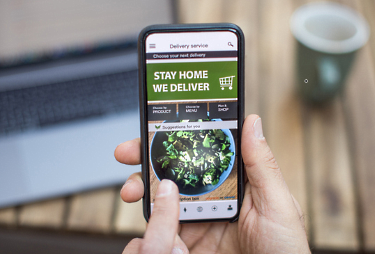
If you've never offered online ordering, but you're comfortable taking phone orders, start there. Once you have orders coming in, talk with your current POS provider to see if you already have built-in software for online ordering. If you do, most POS companies are happy to get you set up.
If not, there are stand-alone options for online ordering through third-party applications. They will have fees associated with them, so weigh your options. As the outbreak began in the San Francisco Bay Area, Servino made the decision to switch from phone-in orders to online ordering. He realized the restaurant would probably have to operate on reduced staff and that phone orders might not be feasible. "Fortunately, our existing software solution had a portal for online ordering, which has reduced the phone calls and given our customers convenience," he says. "By utilizing delivery companies, we have been able to make this a seamless process for both our diners and our team."
Curbside Pickup or Delivery
Not every restaurant is set up for delivery. In fact, if you're currently offering delivery, you're in the minority. This statistic makes the fact that customers can only pick up or request delivery from you even tougher right now. So, start with what you know. If you're already comfortable packaging food for takeout, promote that offering and continue making sales.
Keep in mind that there's still a learning curve for customers with curbside pickup. Where do customers go? Can they pay with a card? How far do you stand from their car? Do they get out and pick up the food from a table or from you? These are all valid questions that you should try to answer via an FAQ (frequently asked questions) page on your website, e-mail list, and social media. The more customers know, the smoother things can run.
At Servino, customers can come in and pick up their order, or staff will meet them curbside. According to the owner Servino, "For those who want a contact-less experience, we've set up a table outside our entrance where we can place their order for pick-up.
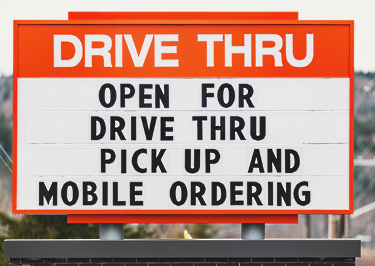
If you find that curbside pickup is working out, you may not need delivery. If you're considering using your own employees for delivery, think carefully about the liability issues that come along with that decision and speak with your insurance carrier to iron out the details before moving forward.
While many in the industry are disappointed with the fees associated with third-party delivery, Tripoli says that using such a service during this time can still work to your advantage. He reminds operators that the fees paid to third-party delivery companies are a marketing fee that helps keep customers aware of your restaurant. "It's more important than ever that we stay in front of our customer, even if we're not making any money," he says.
"We're asking people to come in and takeout as much as possible," says Foulquier, when asked about third-party delivery. "If it's going to be months of delivery, I may need to somehow make it work with my staff. But for now, doing delivery on our own presents so many other hurdles that are not worth it."
Maintaining Marketing
Third-party delivery is just one of the ways restaurants can use to promote themselves. You'll want to maintain a regular connection with your customers as much as possible. "We've continued to stay in touch with our guests via email marketing and social media posts," says Servino. "Our local crowd and influencers are documenting the pick-up and delivery process on their social media; even one person telling another person has helped."
Updating your website and using all social media platforms is a must, according to Tripoli.
"Photos of your newly developed family meal packages make a great email newsletter along with an announcement of your curbside pick-up and delivery program," he says. "Include a thank you note in each delivery, along with a flyer that lists the various meal packages."
The fact that you're offering pickup and/or delivery is itself marketing. But if it's not performed correctly, it has the potential to ruin your brand. Kolaski says to pay attention to the details. "People are still going to be looking at the food and expecting the order to be right," he says. "We are very diligent with our system of checks and balances so that we're looking at every order multiple times before we seal the bag shut."
When this is all over, customers will remember those who went the extra mile, so leave a lasting impression. Whether it's a heartfelt thank you email to everyone at the end of each week, photos shared on social media of your staff packaging to-go orders, or surprise gift card giveaways in random delivery boxes, stand out and show your customers that you're here for the long haul.
Managing Leftovers
Many operations may have leftover fresh food and pantry items that are in danger of spoiling. If you're in this situation, consider the following options:
- Offer food to your staff who may be strapped for cash and not able to shop regularly
- Make meals and bring them to local clinics, hospitals and fire departments
- Offer the food to a local pantry or senior citizen home
- Create meal kits to sell
- List the items for sale on your social channels
Creativity -- When it's Needed Most
Independent restaurateurs are creative and innovative people, which is why they find a way to survive when the proverbial "chips are down". Concord Hill in Brooklyn, New York, is offering build-your-own-cocktail kits, like a four-person bloody Mary kit for $48 and a build-your-own mimosa kit that serves five to six for $35.
Prairie, a live-fire restaurant in San Francisco, has converted its dining room into a general store, with chef and owner Anthony Strong purchasing items in bulk from his suppliers and selling them to locals below retail.
Adam Morgan, owner of Tupelo, Mississippi, restaurants Pizza vs. Tacos and Blue Canoe, let social media followers know that he and the staff were available for odd jobs around town. They've since been hired to help with yard work, painting, moving someone out of their house and more.
Hospitality consultant Chris Tripoli suggests raffling off a complimentary family dinner for 8 to 10 for the first Sunday after you re-open to promote future visits.
Knowing that locals were running low on essential pantry items, owners Becca and Dutch van Oostendorp, at TriBecca Allie Café in Sardis, Mississippi, offered house-made loaves of bread for curbside pickup.
Related Resource
-

Article
Take-Out: The New Normal for Restaurants
It's an unprecedented time for restaurants and one when failure is not an option, but change is required. Fortunately, restaurants in most cities and states are being allowed to offer take-out & delivery. Certainly, that's much better than just being required to close doors for the foreseeable f...